Course blog for third year design studio (Architectural Design III) at INDA: International Program in Design and Architecture in the Faculty of Architecture, Chulalongkorn University (http://www.cuinda.info/)

Tuesday, January 11, 2011

Aerials


As requested by Sunny:
Attached are 3 different scales of aerials from Google Earth Pro: site @ Petchburi, Asok to Sukhumvit and Southern BKK Asok, Khlong Toei to Phra Khanong.

Saturday, January 8, 2011

Siteplan and Creative Economy Links

AutoCAD Asok Basemap

 PDF A4 Handouts of Study Area
A4 Scale 1:3000

A4 Scale 1:1000

A1 Scale 1:1000

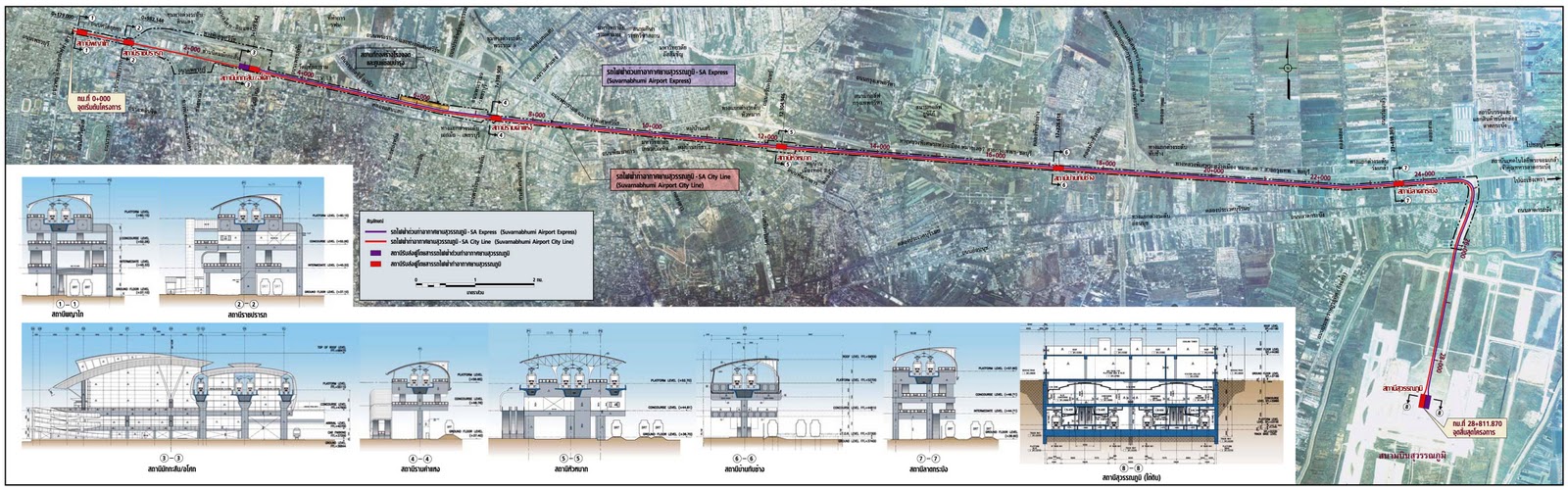
Sections of Airport Link Stations (Click for Full Resolution)

Creative Economy
Creative Thailand website

The 10th National Economic and Social Development Plan and Creative Economy
Thailand Creative Economy (in thai) 

Larger DWG files for Urbanism and Studio. Tip: When combining files, insert block, location 0,0,0, scale 1, check explode and the file will automatically be positioned.  For file management, delete all unneeded information and layers before importing dwg to Sketchup.  Try to keep starting file size below 15 mb.
Bangkok Road edges and canals
Bangkok Buildings Asok to Phra Khanong


The following files and links related to urban programming, mapping, and visualization are being reposted from last semester's Architecture, Community and Ecology course blog for your reference.  

Bangkok Canals, Roads Centerlines and Rail DWG file

Information Visualization and Diagramming Lecture by Aj Malina (Arch,Community and Ecology)

Urban Program Generation Lecture by Aj. Nilay

http://grassrootsmapping.org/

Visual Complexity

City as Living Laboratory
http://www.marymiss.com

Student Manual

Academic Dishonesty:
Student is expected to produce work on his/her own. Outside help or assistance from senior or friends from different year or program is prohibited. Depending on the extent of the help, student may receive no grade for the involved exercise or project. Using other people’s work (research or analysis) as yours is not dissimilar to copying during examination, student will receive an “F” for the course.

Attendance:
Attendance in class is mandatory. Essential course materials, discussions and assistance will be delivered during class/studio sessions. Excused absences are generally granted for documented personal medical reasons (obtain verification from student health center or on a physician's letterhead) or an extreme crisis in the immediate family (death or extreme illness - verify by means of death notice or physician's letterhead). A physician’s letter must always be accompanied by receipt from a hospital or clinic. Persons granted an  excused absence will be granted one class day for each day excused to make up work. Regardless, it is the responsibility of the individual student to notify the Course Coordinating Instructor.
Student missing more than 20% of attendance will not be entitled for the final exam/ presentation. This 20% is translated to roughly six absences. Student may not miss more than four sessions prior to the Midterm review.
All students are required to be at the studio by 1300 hours. If a student is more than 15 minutes late, leaves more than 15 minutes early or is missing from class more than 15 minutes for unexcused reasons, it will be considered a ‘strike’. Two ‘strikes’ constitutes one un-excused absence. Do not ask to be excused from class for any personal activities like family vacation, modeling contest, singing event or etc. You will not be excused.

Cell Phones:
Usage of cell phones is prohibited during class time. If your phone rings during class or you are seen using it, you will be ask to leave and marked as absent for that class.

Class Participation:
Students are expected to participate in all class exercises and activities. Failure to properly participate or slacking off will result in a deduction of your daily class participation grade.

Email:
Students are required to regularly check their email account, which some class materials/  information/schedules will be sent to. Please provide your course coordinator with your preferred email address. You will be responsible for all information and updates pertaining to the class sent to you via email.

Desk-crits:
During the studio hours, students must be at the desk and work while waiting to speak to the instructor. Do not waste time while waiting for your turn. The more work you present to your instructor, the more constructive input you will get in return. The use of computer during the studio hours, other than for studio work, is prohibited. If it is apparent to the instructor that the student is not working during the studio time, the instructor will make a note and marks will be taken off the final grade.

Grading Assessment:
A Excellent 4
B+ Very Good 3.5
B Good 3
C+ Fairly Good 2.5
C Fair 2
D+ Poor 1.5
D Very Poor 1
F Fail 0

Materials/Supplies: (First year studio)
• Supply list for each assignment will be handed out at the end of each class that is prior to the start of a new assignment.
• All efforts will be made to assign materials that are available at ‘Thong Eiang’, which is the local supplies shop at our faculty. However, Thong Eiang not having certain supplies or being out specific items serves as no excuses. Not having proper supplies equals to reduced class participation grade. • Failure to bring correct supplies would affects your final grade.
• Ask questions in advance if a supply listed is confusing or unclear.

Reviews: Midterm and Final review
Student is expected to have the work pin-up in the assigned room or area prior to the review time. For example, if the review time is at 10:00 am, this means that the presentation is ready to start by 10:00 am. Failing to present your project at the assigned time slot will result in an “F” for that project.
If you fail to show up for the review without notifying your instructor or your absence is unaccompanied by a physician’s letter, your grade for that particular review would be “F”. Minor illness such as headache or migraine doesn’t count. A physician’s letter must be of severe case – I.C.U. or operating room that requires several days of resting and recovering period. Furthermore, physician’s letter must be accommodated by a receipt (payment for the doctor visit) failure to produce the receipt will nullify the physician’s letter.

Studio Guidelines:
• Food and drinks are not allowed in the studio space. All open beverages must be left outside of the class.
•  Inform your instructor the first day of class if you have personal issues that might affect your performance.
• All persons and properties will be respected. This includes but is not limited to peers, student materials, classroom materials, teacher and teacher’s materials, etc. Respect the studio space and the space of others; clean up after yourself & leave the studio in good working order at all times. Persons found disrespecting/vandalizing any persons or anything will have a minimum 10 points removed from there university record per incident.

Studio Safety:
With all the tools and equipments you have, many of them are sharp objects that can easily inflict injury upon you when you don’t exercise precautionary measure. Used blades must be discarded at a designated area. Shoes must be worn at all time.

Submission:
Late work will not be accepted unless it qualifies as Excused (See: guidelines provided in Attendance). All assignments are due at the date and time indicated.
Late assignments will be downgraded one letter grade per day/time late.
Incomplete work is generally discouraged. Severe incompleteness will result in the down-grading of individual assignments based upon the degree of incompleteness. All assignments are due in completed form at the date and time indicated. (See also: Excused Absences)

Uniform:
Students are required to observe the proper university attire when showing up for class. T-shirt and/or sandals are not allowed. Violator will be dismissed from the class and will be marked as absent.

University Rules and Regulation:
Students are expected to follow all university requirements outlined in
Chulalongkorn University, Faculty of Architecture Rules and Regulations guide book. Paying special attention to the following sections:
• Chulalongkorn University’s Principles of the Standard for the Polite Attire of Male and Female Students
• Chulalongkorn University’s Principles of the Standard on the Attire of Male and Female Students
• Chulalongkorn University’s Announcement on the Guidelines for the Conduct and Activity of the Students
• Chulalongkorn University’s Principles on Student’s Discipline

Project Brief: Living and Working in the Creative City

Click Here for Course Syllabus

Learning Content
Introduction to an urban context; programs that concern larger contexts: a medium scale mixed use project combining living and working environments. Project requires more comprehensive organizational strategies, scalar relationships, reciprocity between form and function, public and private, adjacencies.

Students will develop an understanding for representation and communication at various scales within an urban context, using analytical diagramming, both descriptive and prescriptive; advanced mapping techniques.

Overview of Project
Program: Mixed Use Building for Creative Studio and Collective Housing
Site: Petchburi Road @ Asok


Creative City- In 2009, Thailand Creative and Design Center (TCDC) was asked by the government to promote Bangkok as a Creative City. One of the immediate plans is to provide local creative enterprises engaging in fashion, films, crafts, design, etc with support in terms of finance, business know-how and working studio space. Creative Studio program requirements include working and display space such as marketspace, 40 individual workplace units (25-40 sq. meters each), Interaction/Communal Flex Space, Learning Auditorium, Exhibition Space, Small library.The mixing of different industries and programs such as fashion designers and filmmakers, enable people to network and encourage social, cultural and knowledge exchanges. The marketplace helps support the operational cost by selling locally produced goods and foster both local and international exchanges. In return for incubation space, participating artist/designers provide educational information for the general public and public displays that are updated every three months.

Housing- Housing design sits within the overlapping realms of architecture and urban design. Today’s housing options in Bangkok, which basically consist of expensive single family houses, obsolete shophouses, unattractive and poorly located townhouses and the ubiquitous Bangkok condominiums. The biggest problem is that the street that shop houses and their pattern of sleeping and living above one’s small family-owned were originally conceived for have now changed drastically. For example, Petchburi Road which was once a trendy pedestrian-friendly street dotted with nightclubs in the 1970’s has now transformed into a car-oriented arterial road. The multiunit housing proposed for the intersection of Petchburi Road and Asok is a new type of urban living that takes advantage of Bangkok’s mass transit networks and creates an active 24-hour community.

During the design process, students should consider the following factors.
Circulation: Design proposals should incorporate flows from various forms of public transportation.
Integration of Different Programs: In order to promote different forms of creativity, diversity and social interaction between different people is important. Aggregation 1: a group, body, or mass composed of many distinct parts or individuals 2 a : the collecting of units or parts into a mass or whole b : the condition of being so collected (Merriam-Webster dictionary)
Diversity: Accommodate a range of housing types and clientele while providing access to shared resources, interior and exterior spaces.
Sustainability: Building systems should include passive and active techniques for sustainable design.
Building Systems: drawings and models should demonstrate a general understanding of building materials, techniques, structural and environmental systems.
Urban Context: spatial and non-spatial relationships between surrounding buildings, roads, infrastructure and sidewalks

Part One: Site Analysis, Case studies and Programming, Diagramming Urban Programs (4 weeks)
Readings and References: Slash City and Work AC Program Primer, Creative Thailand
Part Two: Schematic Design-Unit Design and, Building Type Aggregation (4 weeks)
Readings and References: minimum requirements for light, ventilation, means of egress
Domestic Typology/Prototypes: Density a+t series, Housing Prototypes website
Part Three: Design Development (4 weeks including Design Experimentation Workshop and Holidays)
Generate complete set of final representations as architectural drawings and models

January 10, 2011
Part One: Site Analysis

A student in each group can research one of the following topics in a shared A3 booklet summarizing visual and written information for each topic. Site research and creating digital models, plans and sections, diagrams covering topics related in site interest including but not limited to:

1 Building Typologies
Typologies (building types) Definitions: 1. a systematic classification or study of types. 2. characteristic of or accustomed to cities;
Site Items: Usage and Adjacencies, non-residential vs. residential, Physical Characteristics, material, heights

2 Stat & Demographic Information
Demographics Definitions: 1. the statistical data of a population, esp. those showing average age, income, education, etc. 2. vital or social statistics of a human population, as the number of births or deaths.
Site Items: Legal Information (zoning, setbacks), Demographics: Population, Income, Gender ratio, Family units & households, Age

3 Economic Networks
Economic Networks Definitions: 1. pertaining to the production, distribution, and use of income, wealth, and commodities. 2. pertaining to an economy, or system of organization or operation, esp. of the process of production. Site Items: industrial vs creative economy, creative clusters, production and distribution of goods

4 Urban Flux and Flows
flux & flows Definitions: 1. dealing with the cyclical and time-based phenomena that influence relations and interactions between organisms and their environment, including other organisms. 2. continuous change, passage, or movement
Site Items: congestion, pressures, time cycles: daily, weekly, annual,etc

5 Vista and Site Sections
Vistas and Site Sections Definitions: a view or prospect, esp. from different vantage points
Site items: index of images, inside looking out versus outside looking in, position statement or conclusion regarding site relationships

6 Site History and Culture
History and Culture Definitions:
1. a continuous, systematic narrative of past events as relating to a particular people, country,period, person, etc., the record of past events and times, esp. in connection with the human race. 2. the quality in a society that arises from a concern for what is regarded as excellent in arts, letters, manners, scholarly pursuits, etc.
Site Items: Religion, Food & Entertainment, Festivals & Events, Political Regimes

7 Infrastructure
Infrastructure Definitions: 1. the basic, underlying framework or features of a system or organization. 2. the fundamental facilities and systems serving a country, city, or area, as
Site Items: transportation and communication systems, power plants, waste management and schools.

8 Circulation and Transportation
Transportation Definitions: 1. the business of conveying people, goods, etc. 2. the means of transport or conveyance. Site Items: Waterways & piers, Sois, roads and highways, walkways and pedestrian, railroad and mass transit

9 Environmental Factors
Environmental Factors Definitions: the conditions that we live example : The land , air and water, in which people ,animals and plants live. Site Items: Solar patterns, Climate: air quality, temperature, rain and wind direction